Cryptocurrency Trends Shaping Niche Gaming Experiences in Emerging Economies
Written by Zoe Schmid · Jun 24, 2026
Cryptocurrency Trends Shaping Niche Gaming Experiences in Emerging Economies
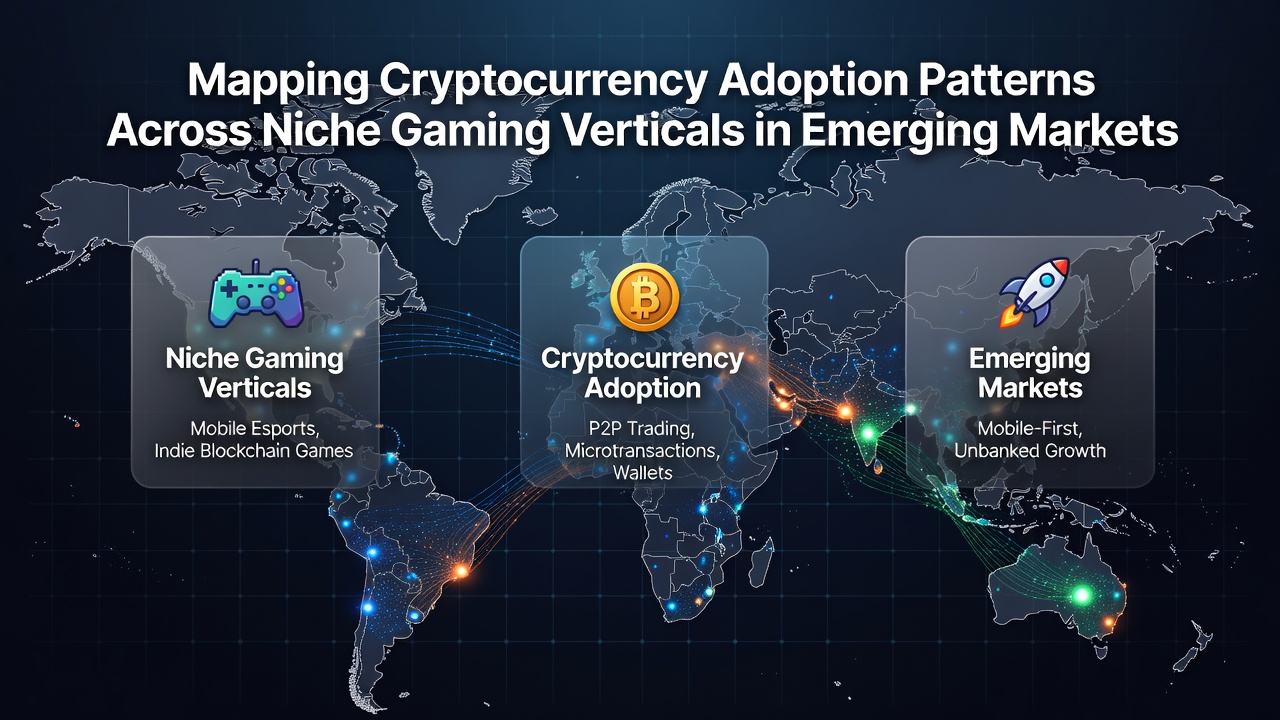
Digital currencies have found distinct pathways into specialized gaming segments throughout developing regions, where mobile connectivity and young populations intersect with evolving financial technologies. Observers note that adoption patterns differ sharply by vertical, with play-to-earn mechanics gaining traction in Southeast Asia while esports ecosystems in Latin America lean toward stablecoin settlements for tournament prizes. Data from mid-2026 shows transaction volumes in these markets rising steadily through June, driven by localized wallet solutions that bypass traditional banking hurdles.
Regional Variations in Adoption
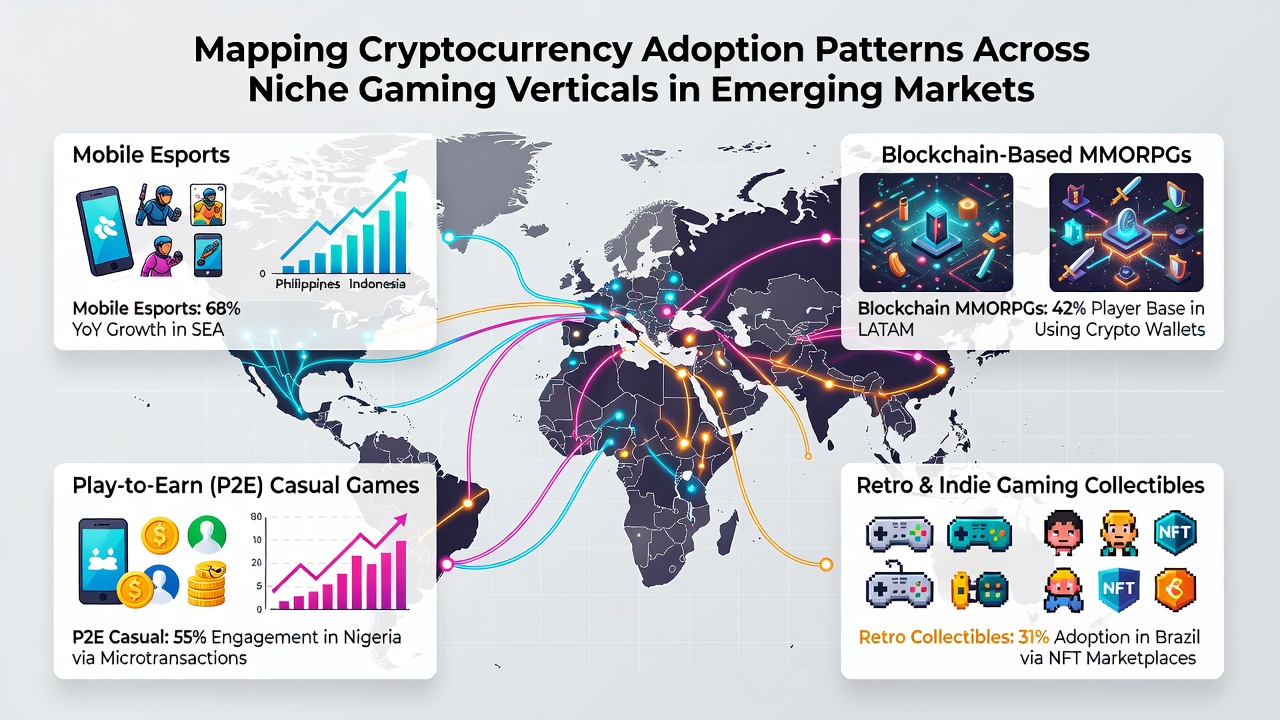
Across Southeast Asia, mobile casual games integrated with token rewards have drawn consistent user bases in Vietnam and Indonesia, where daily active players often convert in-game earnings directly into local currencies via peer-to-peer networks. Researchers tracking these flows point to lower transaction fees as a primary driver, allowing small-scale gamers to participate without the overhead of conventional payment rails. Meanwhile, Latin American markets such as Brazil and Colombia display stronger uptake in competitive esports titles, with crypto payouts supporting cross-border team formations and viewer donations during live events.
In sub-Saharan Africa, blockchain-based collectible games have carved out space in Nigeria and Kenya, where users leverage stablecoins to maintain value amid local currency fluctuations. Studies conducted by regional fintech observatories indicate that these patterns emerged more rapidly after 2024 regulatory clarifications in several jurisdictions, enabling platforms to offer compliant on-ramps. June 2026 figures reveal continued growth in wallet activations tied to gaming apps, particularly among users aged 18 to 35 who combine leisure with micro-earning opportunities.
Vertical-Specific Patterns
Niche verticals reveal tailored usage behaviors rather than uniform trends. Esports platforms in emerging economies frequently employ cryptocurrencies for prize pools and sponsorships, reducing settlement times from days to minutes compared with wire transfers. Mobile gaming verticals focused on simulation and strategy titles incorporate token staking features that reward consistent play, with data indicating higher retention rates when rewards tie directly to tradable assets.
Collectible and metaverse-style experiences show different dynamics, where users trade virtual items across borders using decentralized exchanges. Evidence from transaction analytics highlights spikes during regional tournaments or seasonal updates, with volumes in Brazilian and Filipino markets outpacing broader averages. These activities remain concentrated in urban centers with reliable internet access, though rural penetration continues to expand through feature-phone compatible interfaces.
Enablers and Infrastructure Factors
Payment innovations play a central role, as local exchanges partner with game developers to embed deposit and withdrawal options directly within apps. According to analysis from the Bank for International Settlements, emerging market central banks have increasingly explored interoperability frameworks that support crypto-linked gaming without disrupting monetary stability. This environment encourages experimentation while maintaining oversight on anti-money laundering requirements.
Academic reviews from institutions studying digital economies note that smartphone penetration rates above 70 percent in key urban areas correlate strongly with crypto gaming activity. Infrastructure improvements, including expanded 4G and early 5G rollouts, have lowered barriers for real-time trading and multiplayer sessions that rely on low-latency connections. Observers tracking June 2026 metrics report that platforms offering multi-currency support, including both volatile tokens and stablecoins, achieve broader reach across income segments.
Data and Measurement Approaches
Mapping these patterns relies on on-chain analytics combined with app store telemetry and surveys from local gaming associations. Reports compiled by research groups such as those affiliated with the Inter-American Development Bank provide granular breakdowns by country and vertical, revealing that esports verticals account for a larger share of high-value transfers while casual mobile games dominate in transaction frequency. Such datasets help identify clusters where adoption accelerates fastest, often near technology hubs or university campuses.
Those analyzing longitudinal trends emphasize that seasonal events, such as regional esports leagues or game launches, produce measurable upticks that fade unless sustained by ongoing reward mechanisms. Privacy-focused wallet features have also gained favor in markets with heightened data protection awareness, allowing users to maintain separation between gaming identities and financial profiles.
Conclusion
Patterns of cryptocurrency adoption across niche gaming verticals in emerging markets continue to evolve through distinct regional and vertical lenses, shaped by infrastructure, regulation, and user demographics. June 2026 observations underscore sustained momentum in mobile and esports segments, supported by localized tools and expanding digital access. Future mapping efforts will likely benefit from refined datasets that capture both on-chain activity and off-platform behaviors, providing clearer visibility into how these ecosystems develop over time.